Sep 22, 2026tech-news
R290, Climate Class 5, and Dual-Zone Design: What 2026 Refrigeration Sourcing Actually Looks Like
1️⃣R290 transition is forcing you to replace your product catalog 2️⃣Climate Class 5 requirement is killing your current supplier 3️⃣Dual-zone prep tables are what your chain clients keep asking for
Commercial refrigeration has quietly become one of the most regulated — and most expensive — line items on any kitchen project.
A single compressor failure in a pizza prep table doesn't just waste ingredients. It triggers HACCP non-conformance reports, pauses service during a lunch rush, and erodes the margin you counted on for the entire quarter. With EU F-Gas phase-outs accelerating, energy costs climbing, and urban kitchen footprints shrinking, off-the-shelf catalog units are no longer a safe default.
After years of engineering cooling systems for contractors and distributors across Europe, Africa, and the Middle East, three sourcing decisions now separate profitable projects from headache projects.
1. Stop buying R404a. It's not a "phase-out" anymore — it's a tax line item.
European importers are already paying carbon premiums on legacy HFC-based units, and the rest of the regulatory map is catching up. R290 (propane) isn't a marketing trend — it's the baseline compliance requirement for any unit entering the EU, UK, and an increasing number of Middle Eastern markets.
What to demand from your factory:
- Full R290 circuit with CE certification documentation
- Energy consumption testing data (not just claims) — expect up to 35% lower daily draw vs. legacy R404a units
- Refrigerant charge volume and safety documentation built for customs
2. Don't buy a 25°C lab-rated cooler for a 45°C kitchen.
Standard reach-ins are tested in climate-controlled showrooms. Your kitchen hits 40°C+ by 1 PM and stays there until close. A compressor sized for mild ambient conditions doesn't just run hotter — it runs continuously, wears out in half the expected lifespan, and pulls more electricity doing it.
What to demand from your factory:
- Certified Tropicalized Climate Class 5 engineering (stable operation at 43°C ambient)
- Genuine Embraco or Secop compressors, not rebranded domestic alternatives
- Dixell or Carel digital controllers — parts your local technicians already know how to service
3. The machine should fit the workflow, not the other way around.
One-size-fits-all dimensions force chefs to rearrange prep lines around a fridge that doesn't match their station. In a 40-square-meter urban kitchen, that wasted motion adds up to seconds per dish, every dish, all service long.
What to demand from your factory:
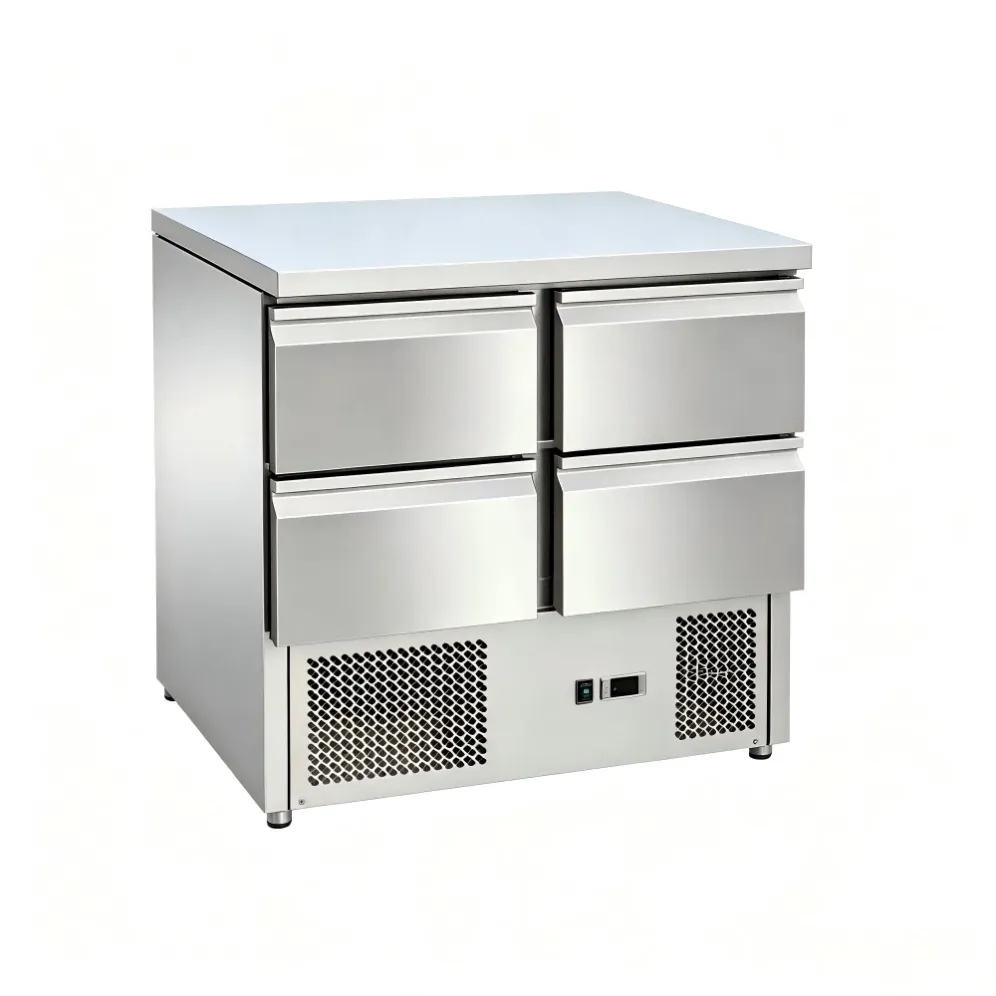
- Dual-zone prep tables: open GN pan rail at 1–5°C, separate under-cabinet temperature
- Interchangeable drawer/door configurations per station
- Reinforced worktable tops rated for direct oven/charbroiler placement (300KG+ load)
The supply-side detail that protects your bid
When you're comparing factory quotes, these four points decide whether a project stays profitable or turns into a support ticket:
表格
Your Risk | What the Factory Should Provide | Why It Matters |
|---|---|---|
HACCP / digital audit failure | Pre-wired Dixell/Carel loggers, 220V/50Hz native | Automatic temperature records survive health inspection |
Corrosion in salty or acidic kitchens | SUS304 interior and exterior, quick-release magnetic gaskets | Zero odor traps, zero rust call-backs |
Container half-empty on the water | Mixed consolidation: refrigeration + stainless steel prep tables in one 40HQ | You pay ocean freight once, not twice |
A sensor dies in week 14 | 12-month warranty + free 2% spare-parts kit on board | Your local tech fixes it same-day, no wait for air freight |
What we build
- Prep stations: Custom pizza counters (marble/granite tops available), mega-top salad rails, sandwich coolers
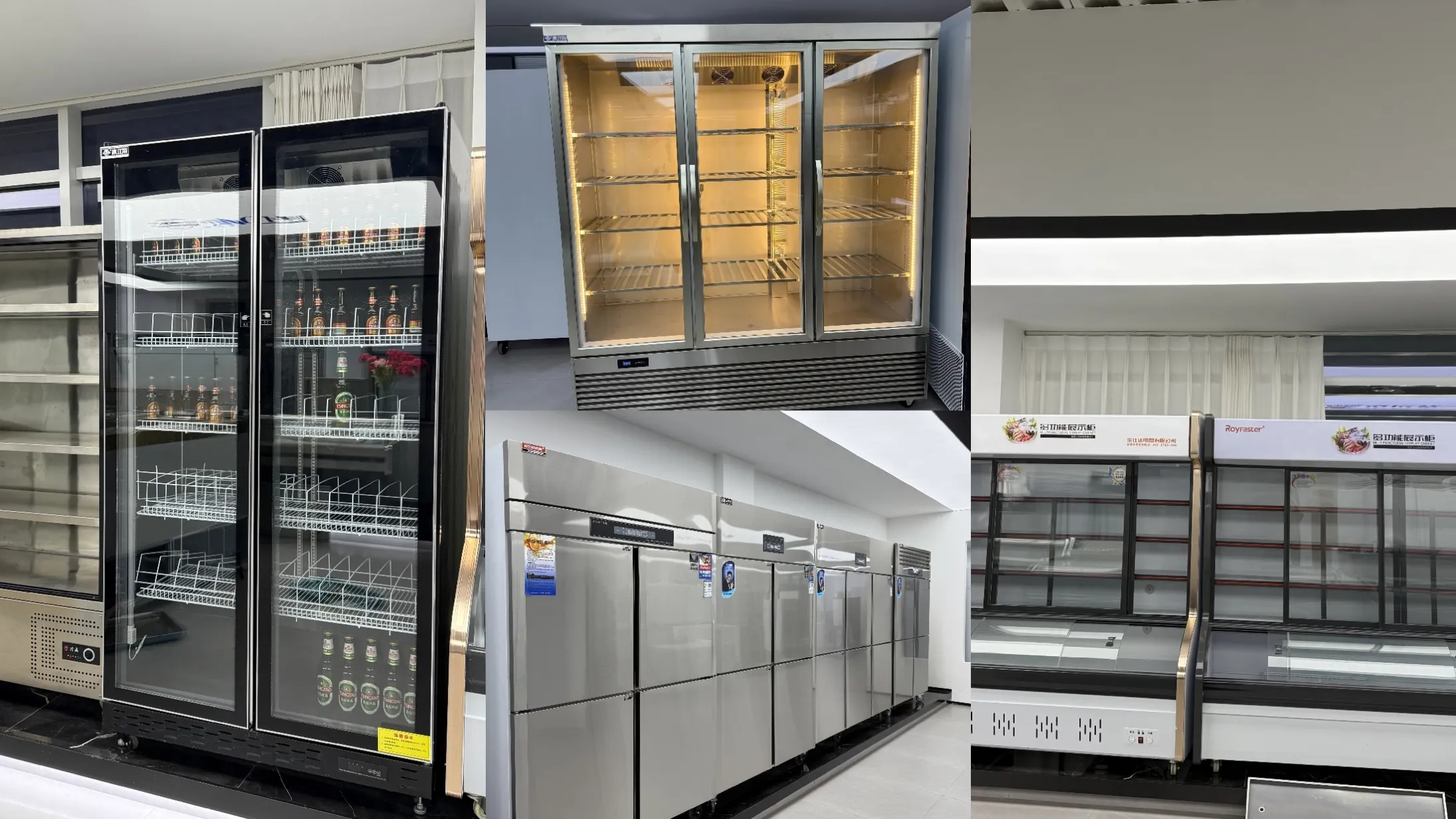
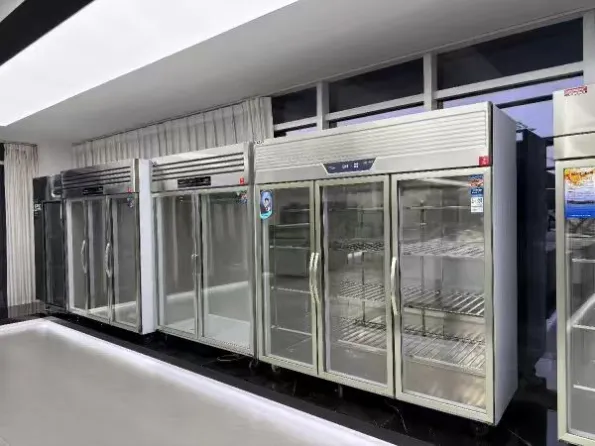
- Reach-ins: 1–3 door solid/glass chillers, deep freezers, blast chillers (90-min core drop from +90°C to −18°C)
- Front-of-house: Curved/square pastry displays with heated anti-condensation Low-E glass
- Ice systems: Cube, bullet, and flake makers with high-density insulated storage
One question before you request a quote
Are you sourcing for a single project, or building a repeatable catalog line?
That answer changes the conversation: project buyers get 24-hour CAD turnaround and flexible MOQ; distributor partners get OEM private-label etching, neutral packaging, and a consistent specification sheet they can rely on quarter after quarter.
Either way, send over your layout or your product gap list. We'll tell you honestly whether it's a fit.